If you love getting out into the countryside with your dog, there’s an important update to be aware of.
From 18 March 2026, the new Countryside Code guidance makes responsible dog ownership, especially in rural areas, an explicit expectation.
At first, it may seem like just more rules. But these changes are about protecting the surroundings we love, and making sure we can keep enjoying them with our dogs. This original act has been in place since 1953, but the number of sheep disturbances is rising, and something needs to change.
Let’s walk through what’s changing and what it means in real life.
What’s Changing?
The updated guidance places greater emphasis on keeping dogs under close control in the countryside, particularly around:
- Livestock (like sheep, cows and horses)
- Ground-nesting birds and wildlife
- Sensitive habitats, especially in spring and summer
This original legislation, the Dogs (Protection of Livestock) Act 1953, was designed to protect livestock from worrying by dogs. But ‘worrying’ was not clearly defined, leaving it to individual interpretation. A dog doesn’t need to make physical contact with animals to commit an offence and is now defined as:
- attacking livestock, or
- chasing livestock in such a way as may reasonably be expected to cause injury or suffering to the livestock or, in the case of females, abortion, or loss of or diminution in their produce; or
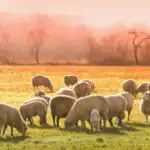
- being at large (that is to say, not on a lead or otherwise under close control) in a field or enclosure in which there are sheep.
It is this last point that changes things: being in the same space as sheep with your dog off-lead would mean breaking this law, even if they don’t chase.
In practical terms, this means:
- Leads are strongly expected in more situations, not just recommended.
- Dog owners need greater awareness of seasonal risks, especially during lambing.
- Farmers and land managers now have clearer guidance on what to do if dogs are uncontrolled.
While these have always been good practices, the update makes them clear requirements and enforces them more consistently.
If you want to read the amendment in full, check out the Dogs (Protection of Livestock) (Amendment) Act 2025
Why It Matters
Rules can seem restrictive. But this one aims for balance.
We share the countryside with:
- Farmers whose livelihoods depend on livestock
- Wildlife that relies on undisturbed habitats
- Other walkers who want to feel safe and relaxed
Even the friendliest dog can cause harm if it chases sheep or disturbs nesting birds. And often, it’s not intentional — it’s just instinct.
These updated guidelines help protect:
- Animal welfare
- Wild habitats
- Access for dog walkers in the long term
The core message: Being responsible now helps keep access to the countryside open for everyone.
What It Means for You Day-to-Day
Good news: Only small, intentional changes are required.
Always check local signs, as some areas require dogs to be on a lead all or part of the year.
Here’s how it might look when you’re out and about:
If in doubt, put your dog on a lead
If you’re near livestock, on farmland, or in nature reserves, it’s best to use a lead as your default. Even if your dog has a great recall, it removes any risk.
Think about what the farmer sees in your behaviour: they don’t know your dog’s personality; all they can make a judgement on is what they see you and your dog doing.
Be mindful of the seasons
Spring and early summer are key times for:
- Lambing
- Ground-nesting birds
During these months, staying on the path and using a lead matter.
Read the landscape
Each walk differs. Moorland, coasts, and farmland have distinct considerations.
Look for:
- Signage
- Livestock nearby
- Narrow paths or enclosed spaces
Adapt your approach if necessary.
Sometimes the best decision is simple: if a field is full of sheep, choose another route. There’s always another path, another beach, another walk to enjoy.
Our View at MyPAWfectPlace
At MyPAWfectPlace, we see this as an encouraging move forward, and for many dog owners, it makes no difference. But, many do ignore signs – a local nature reserve near me has signs saying dogs must be on a lead, but probably 70% walk off lead. It is this behaviour that will get our favourite dog walks cut off with total dog bans.
Having reliable recall means we can let our dogs off the lead when it is safe to do so, and they can run, sniff, and mooch about. But we also have to be realistic.
Far too many assume that because their dog has a good recall and is a lovely-natured dog, it won’t chase or harm livestock. But you can’t guarantee this 100%, a dog doesn’t even have to chase sheep to break the law.
These rules reinforce what we believe: responsible dog ownership protects places we love.
The countryside isn’t just ours. We share it, and when we walk considerately, we:
- Build trust with landowners and farmers.
- Help protect wildlife and natural spaces.
- Keep access open for future trips and walks.
Respecting the countryside rewards us with quiet paths, open views, and time with your dog in nature.
A Simple Way to Think About It
When you’re out with your dog, just ask yourself:
“Is my dog under control for this environment, right now?“
If the answer is yes, you’re doing it right.
That’s what it’s all about. 🐾